
Solutions
Reach shoppers at the exact moment of decision.
Brands, importers, and distributors have wanted this channel for decades: telling your product's story to a shopper standing at the shelf, deciding — and watching demand take shape, question by question.
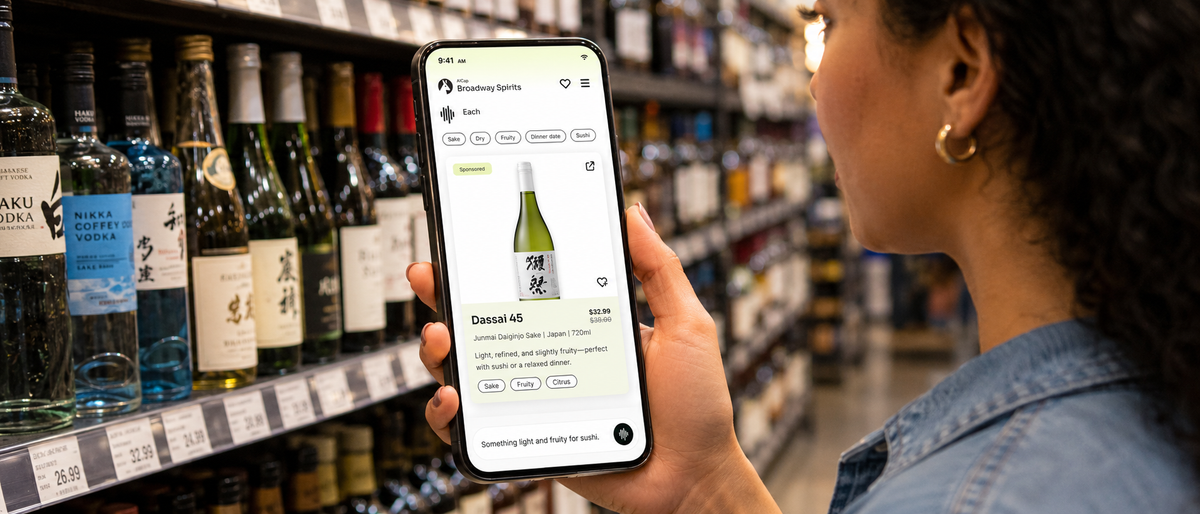
What Brands Get
Built around brand priorities.
Brand-customized content
Visuals, tone, and promotions configured to your brand guidelines — consistent across every deployed unit.
Shopper preference data
Real signal on what shoppers ask about, compare, and ultimately choose within your category.
Sponsored placement, disclosed
Featured within recommendations that already fit what the shopper asked for — never steering a retailer's assortment, always labeled.
Why Brands Choose AICap
An always-on ambassador for your brand.
AICap represents your brand the way you'd represent it yourself — the right story, in your own terms, every single time. A consistency no human sales team can match, delivered by an AI trained on your materials.
And unlike a static display, it's a two-way channel: every question a shopper asks about your product becomes demand data you can act on.
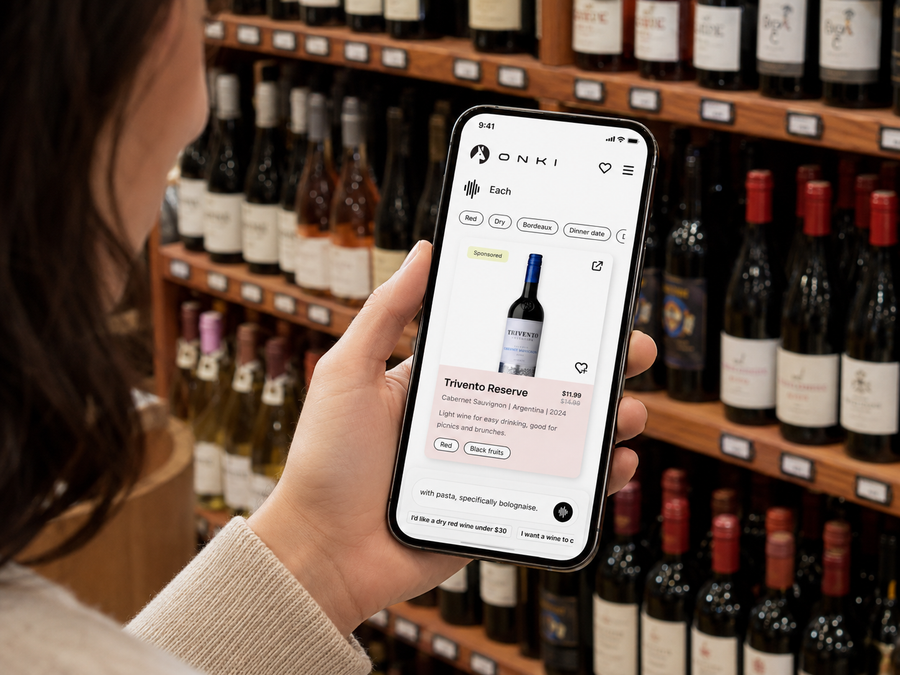
Built for shopper trust, and built to be compliant. A sponsored product only ever appears when it genuinely matches what the shopper asked for, and sponsorship is always disclosed on the card. Brand dollars go to Onki, never to the retailer, keeping every placement on the permitted side of federal tied-house rules (27 CFR Part 6).
FAQ
Common questions, answered.
Everything brands ask before running a campaign.
What is AICap for brands?
A responsive, measurable channel inside the physical-store purchase decision. AICap identifies relevant shopper intent, brings your product into consideration, explains why it fits, handles objections, tests messages and offers, and connects that influence to what the shopper actually bought.
How is this different from retail media?
Retail media is built around exposure. AICap starts when a shopper expresses a need — “I need a bold red under $40 for steak” — and your product is a credible answer. Exposure becomes a conversation: stated intent, relevant consideration, explanation, follow-up questions, and purchase.
How does AICap know what a shopper wants?
They tell it. One sentence carries budget, occasion, recipient, taste, and hard constraints — intent that online systems reconstruct from clicks, search history, and past transactions, if they get it at all.
What does a campaign cost?
Three components: a program base, a rate per measurable shopper engagement, and a rate per prioritized appearance. You pay for qualified decision activity rather than raw impressions, and a first program starts as a bounded test.
How small can we start?
A handful of stores and one objective. That's enough to see how shoppers respond to your product, test two or three messages, and price the economics before you expand.
Does paying guarantee the top recommendation?
No — and that's why the influence is worth buying. Paid priority gives an eligible product more opportunities to appear when it genuinely fits, while shopper fit, product truth, availability, retailer economics, and recommendation quality shape the final choices. Shoppers trust the recommendation, which is what makes participating in it valuable.
What if a competitor buys priority on the same shopper?
Priority doesn't reserve the shopper. When multiple products fit, they compete on shopper fit, product truth, availability, retailer economics, and commercial priority. AICap captures the comparison and the shopper's response — and that readout is often worth more than the appearance you lost.
Can AICap reach new-to-brand shoppers?
Most shoppers start with a need, not a brand. When your product fits, AICap introduces it, explains why it's relevant, compares it against the familiar alternative they came in for, and measures whether that introduction moved them.
Can AICap help launch a new product?
A new product's problem is that nobody asks for it by name. AICap finds shoppers whose stated needs fit it, introduces it mid-decision, tests positioning and offers, and measures consideration, trial, conversion, and incremental impact.
How does AICap make my existing distribution more valuable?
Shelf placement buys availability. AICap turns it into demand: identifying relevant shoppers, earning consideration, explaining the product, answering objections, and measuring the resulting purchases. You worked to win that placement — this is how it produces velocity.
What can a campaign optimize for?
Consideration, discovery, trial, conversion, units, trade-up, basket attachment, offer response, incremental sales, or gross-margin dollars. Because AICap observes both the decision process and the outcome, it learns which messages, offers, and interventions move your specific objective.
Can we test messages and offers?
Continuously. Product stories, benefits, explanations, objection responses, and offers run against each other, and AICap measures which ones change qualified shopper behavior and purchase outcomes — not which ones got attention.
Why do shoppers choose a competing product?
AICap reveals the decision that sales data misses: the shopper's mission, the alternatives considered, the questions asked, the objections raised, and the stated reason for preference or rejection. A competitive loss becomes evidence you can act on.
What shopper intelligence do I get?
The decision behind the sale — missions, questions, consideration sets, comparisons, objections, rejected alternatives, responses to your messages, and downstream outcomes. Not just what shoppers chose, but what shaped the choice.
Can AICap connect brand influence to purchases?
Yes. AICap links campaign interactions to the resulting transaction and product outcome through retailer transaction data.
How do you measure incrementality?
Campaign outcomes are compared against a credible baseline using randomized exposure or controlled store, aisle, time, or shopper comparisons. The result reports as incremental sales or gross-margin impact — a business number, not a media metric.
How targeted can a campaign be?
Down to the decision: participating stores, products, shopper missions, specific questions, decision contexts, messages, and offers. Your budget goes where your product has a real reason to win.
Where can I run a campaign?
Across participating stores that carry your product, starting with a retailer, region, category, or small store group. AICap is cross-retailer, so one objective runs across multiple retailers while each store's assortment, pricing, and availability stay specific to that location.
Why would a retailer want my brand to use AICap?
Because a successful campaign creates retailer value too. Relevant brand participation improves product discovery, conversion, mix, and gross-margin dollars while giving the retailer better shopper and merchandising intelligence. Your brand spend becomes measurable contribution to store performance.
Can AICap help me prove value to my retailer?
It gives you and the retailer shared evidence around the same shopper decision — engagement, consideration, purchase, and gross-margin outcome. That turns joint business planning from a negotiation over allowances into a conversation about measured contribution.
What gets better as AICap scales?
AICap captures declared intent, the choices presented, shopper responses, and purchase outcomes across stores. Every question, refinement, comparison, objection, and outcome improves future recommendations and campaigns, and gives brands a richer view of how physical-store decisions get made.
Get Started
Talk to Sales
Tell us about your brand and campaign goals. We'll follow up to scope a fit.