
Solutions
Free to run. Live within 48 hours.
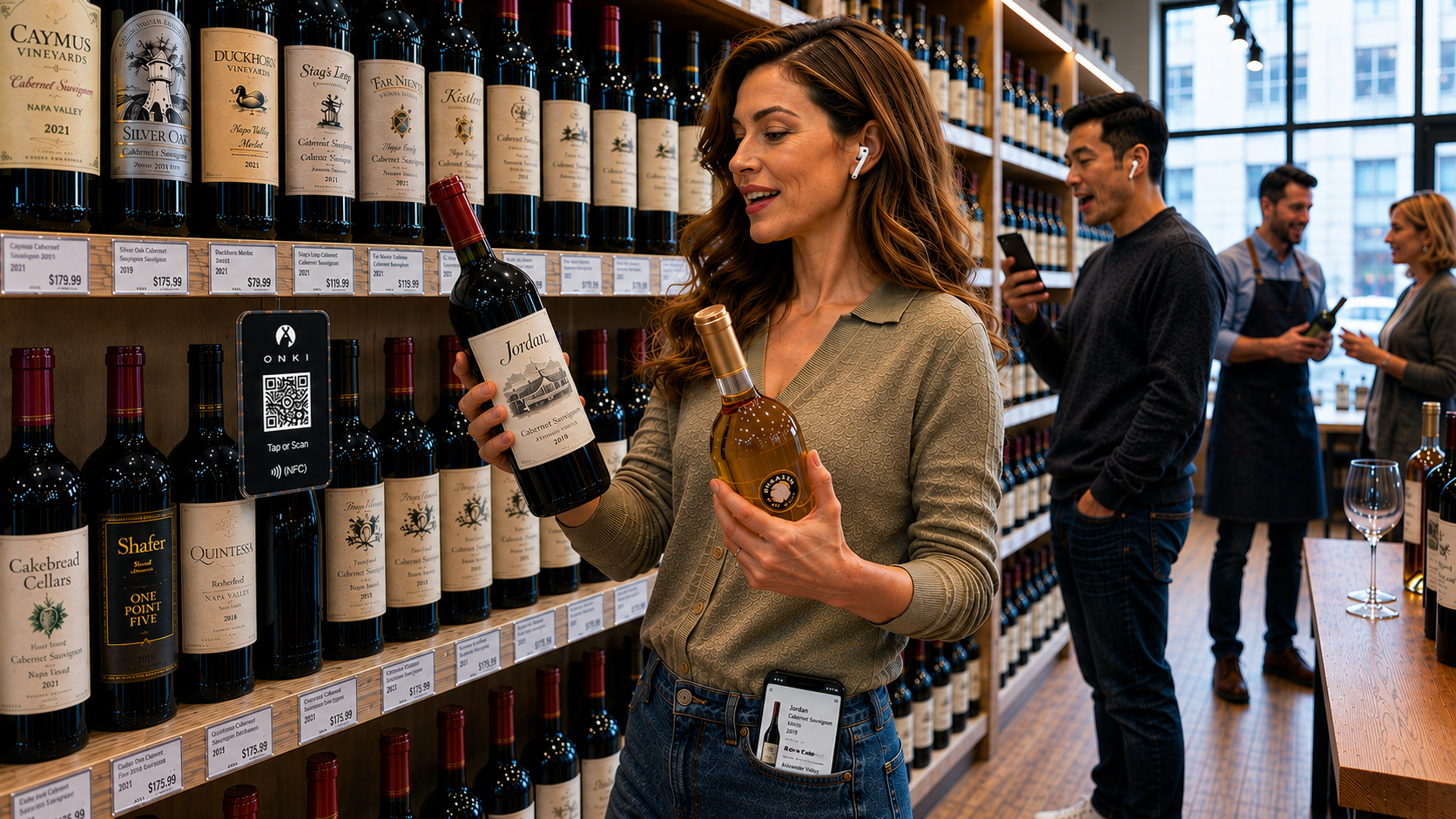
Onki turns hesitation at the shelf into purchases. We’re starting with wine, where the selection is deepest and the guidance gap is widest, then expanding across the rest of the alcohol aisle. No hardware to buy, no headcount to add, nothing to pay.
What Retailers Get
Built around retailer priorities.
In-aisle conversion lift
Guide undecided shoppers to a confident purchase right at the moment they’re deciding, lifting both conversion and basket size.
Repeat-visit loyalty
Give younger, digital-first shoppers the personalized help they expect, and turn one-time visits into repeat customers.
Expert service at scale
Give every shopper your best associate’s expertise, in their own language, without adding headcount or training time.
Why Retailers Choose AICap
Expert guidance on every shift, without adding staff.
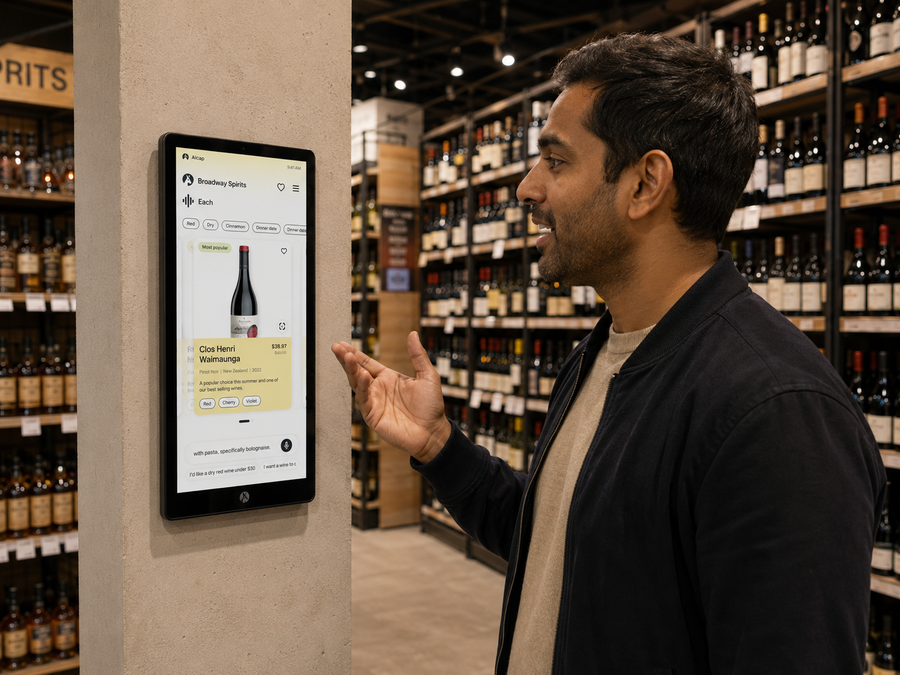
Wine spans thousands of unfamiliar labels, regions, and styles, and even a great associate can’t master every corner of it or be on the floor every hour the store is open. The same is true across spirits, beer, and the rest of the alcohol aisle. Onki gives every shopper the same expert guidance, whether it’s a quiet Tuesday or a packed Saturday, so no question goes unanswered and no sale walks out the door.
Designed with compliance in mind. Onki is free for every retailer, regardless of which brands participate. Brand dollars go to Onki and are never tied to what you stock, where it sits on the shelf, or how it’s priced. The model is built around federal tied-house rules (27 CFR Part 6) from day one.
FAQ
Common questions, answered.
Everything retailers ask before running Onki.
What is Onki?
Onki is the AI-driven engagement and merchandising platform for physical retail. Every shopper gets an on-demand product expert that knows their needs and your assortment, then helps them discover, compare, and decide. You get a measurable digital funnel from shopper intent to purchase.
Why does a physical store need a digital shopping funnel?
You invest to get shoppers through the door. Then the decision path goes passive — the same shelves, signs, and promotions for everyone, and no record of what any shopper was actually trying to do. Onki makes that high-intent traffic responsive and measurable.
Why would shoppers use Onki?
Onki holds more product knowledge than any associate can carry, never runs out of patience, and serves everyone at once. Shoppers who prefer to explore privately can ask anything without waiting or pressure, then bring in an associate when human help adds value.
How does a shopper use Onki?
Scan a QR code or tap a store screen, then speak, type, or touch. Say what you need — Onki narrows your assortment, compares the strongest options, explains the tradeoffs, answers follow-ups, and points to the shelf.
Do shoppers need an app or an account?
No. A scan opens Onki in the browser and the conversation starts immediately. The shopper gets personalized, store-specific help without stopping to install an app or create an account.
Do I need to install new hardware?
No. Onki runs on shopper phones and on screens you already have. Dedicated kiosks and tablets are available when a store wants a permanent aisle presence, but nothing is required to launch.
How does Onki improve my store's performance?
It creates more value from traffic already inside the store — saving uncertain purchases, improving mix, supporting trade-up and cross-sell, completing baskets, introducing unfamiliar products, and making promotions land with the right shopper. The target is gross-margin dollars, not clicks.
Most of my shoppers already buy something. What does Onki change?
High conversion makes Onki more valuable, not less. The opportunity is what they buy: which brand, which price point, whether they trade up, whether they add the complementary item, whether uncertainty quietly shrinks the basket. Onki works on the decisions between the door and the register.
What happens if Onki recommends something I'm out of?
It doesn't. Availability is a hard constraint, not a ranking factor — out-of-stock products are excluded from recommendations. When a shopper wants something you don't stock, Onki tells you, which is often the more valuable signal.
How does Onki work with my associates?
It absorbs the knowledge-heavy part of selling — answering questions, explaining products, comparing options, qualifying needs. Your team spends more time on relationships, service, and judgment, and receives the shopper's need and shortlist when a handoff makes sense.
How does Onki know what to recommend?
It combines what the shopper says with deep product knowledge and your actual assortment, then weighs fit, hard constraints, price, availability, store context, and your economics to produce a small set of strong choices — each with a reason attached.
How does Onki keep guidance accurate?
Exact facts — product identity, price, availability, hard constraints — come from structured sources, not from a model's memory. Recommendations and explanations build on that foundation, so the shopper gets guidance grounded in facts.
What do I learn about my shoppers?
The decision itself becomes visible: what shoppers are trying to accomplish, what they ask, what confuses them, what they compare, what they reject, what changes their mind, and what they buy. That reshapes assortment, merchandising, and promotion decisions.
Who owns the shopper data?
You do, for your stores. Onki's business is influence and measurement, not selling identifiable shopper data — that isn't a policy we adopted, it's the model we built. Retailers get the shopper and session data they want to see.
Do I control which brands appear?
Onki manages brand participation and recommendation policy. Retailers wanting direct control over brands, campaigns, content, and policy use the retailer-controlled product. In both, brand participation works within shopper fit, product truth, availability, and your assortment.
How do brands participate?
Brands fund product education, offers, and measurable participation around live shopper decisions. You get a brand-funded engagement layer, shoppers get better guidance, and brands get a responsive, measurable channel during the active purchase decision.
How does Onki work with my existing systems?
It connects to catalog, pricing, inventory, promotions, POS, product location, loyalty, and ecommerce, so guidance reflects the real store and outcomes are measurable. Launch needs the catalog; everything else deepens the experience as you add it.
Can Onki serve shoppers in multiple languages?
Yes — conversational, store-specific help across languages, which matters most in exactly the neighborhoods and categories where a shopper is least likely to ask an associate for help.
What categories does Onki support?
Onki creates the most value where choice is hard: large assortments, unfamiliar attributes, preference-driven decisions, real trade-up opportunity, and thin expert coverage. Onki starts with alcohol and is built to extend across physical retail.
How do I know it's working?
Onki links shopper interactions to downstream actions and POS outcomes. Success is incremental gross-margin dollars; engagement, mix, basket, and conversion explain where the lift came from.
What does it take to get started?
Very little. You provide the catalog and basic store information. Onki handles setup, configuration, and the shelf materials. Deeper integrations get added when they create more shopper or measurement value.
How much does Onki cost?
Standard Onki is free. Brand participation funds it. Retailers wanting control over content, recommendation policy, campaigns, integrations, reporting, or governance use the paid retailer-controlled product.
Can I start small?
Yes — one store, one category, or one shopper use case. Onki measures engagement and economics inside a bounded deployment, then expands across stores, categories, and surfaces as results justify it.
Does Onki get better over time?
On two clocks. Within a conversation, each answer sharpens the current recommendation. Across sessions and stores, outcome-linked interactions improve future recommendations, merchandising, campaigns, and measurement.
Get Started
Request a Pilot
Tell us about your stores. We'll follow up to scope a pilot that fits your categories and footprint.